Guides
Winnipeg flood vs. Halifax surge: water mitigation recovery
Red River flooding and Halifax storm surge differ for water mitigation recovery: one arrives on a forecast crest, the other on a tide, with hours of warning.
What to take away
- Winnipeg's Red River flood arrives on a published forecast with weeks of lead time; Halifax storm surge arrives with hours of warning and no season.
- Manitoba publishes river levels, flood sheets and floodway status; Halifax publishes coastal exposure maps and shoreline policy instead.
- The Manitoba Emergency Management Organization runs provincial flood response; Halifax storm surge work sits with the municipality and its climate plan.
- Insurers treat overland flood, sewer backup and storm surge as separate perils, so the same loss bills differently in the two provinces.
- Equipment splits cleanlytemporary heat and desiccant capacity in Winnipeg, generators and salt-aware handling in Halifax.
Winnipeg Red River flood risk and Manitoba's flood information programmes
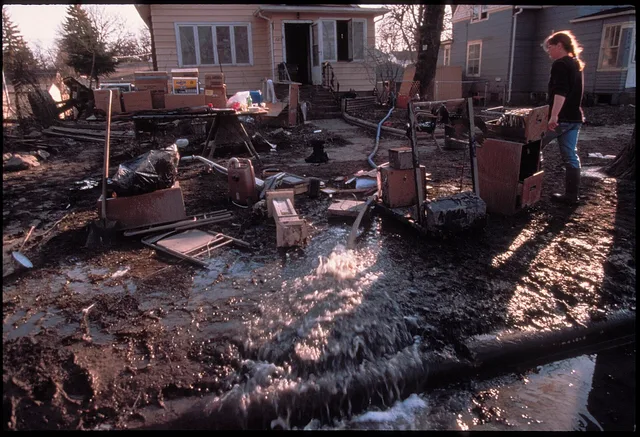
Winnipeg sits on a river that flows north. Spring melt in the American portion of the basin runs into frozen ground and a still-frozen channel downstream. The water has nowhere to go, so it spreads and sits for weeks.
Red River flood season
- Springmelt on frozen ground
- Weekswater spreads and sits
- Crestprovince publishes forecast
- Recessionlong, slow decline
That shape decides how you staff a water mitigation recovery job here. A Red River flood is not a burst pipe. It has a season, a crest and a recession, and the province publishes all three.
The Province of Manitoba runs a flood information hub carrying forecasts, flood sheets and current conditions for the Red River and other basins. Restoration firms read it to stage equipment before the crest instead of chasing it after.
River level is only half the loss. Winnipeg also floods from inside: melt on frozen lawns, overland flow, and sewer backup when the combined system surcharges. Those calls arrive with the same weather that lifts the river, which is why spring is the busiest season for local firms.
The Red River Floodway diverts water around the city, and its operation holds river levels inside Winnipeg below what the basin would otherwise produce. One channel changes the loss profile of every property in the city.
For an owner weighing where to base crews, the Prairie market is seasonal, concentrated and predictable. That pattern sits behind our market outlook for restoration businesses.
Cold adds constraints. Frozen ground refuses infiltration, so melt runs off. Frost heave cracks foundations and lets water in at the worst moment. Drying in an unheated space changes dwell time and energy cost on every job.
Transportation and Infrastructure publishes levels, forecasts and infrastructure status through the season. Firms that follow it pre-position desiccant units, generators and temporary heat before access points close.
What the Red River forecast actually gives you
A forecast is a window, not a date. Peak timing shifts by days and crest height carries a range. Firms that schedule against the window rather than the date waste less labour.
- Check the provincial flood outlook weekly from March onward
- Pre-book temporary heat and desiccant capacity before the crest
- Confirm access routes that stay open when dikes go up
- Line up lodging for out-of-town crews near the affected quadrant
- Photograph pre-loss conditions for properties in the flood plain
Manitoba Emergency Management Organization and provincial flood response
The Manitoba Emergency Management Organization coordinates the provincial response when a flood exceeds local capacity. It works with municipalities, provincial departments and federal partners.
Its role sets the rhythm of an event. When the province activates, municipal emergency operations centres activate with it, and access, evacuation orders and re-entry timing follow from that structure.
Recovery is a separate phase. Once water recedes, the province shifts to damage assessment, program delivery and, for repeatedly flooded properties, buyouts. Firms that know the sequence position for recovery work instead of competing for response work.
Manitoba's approach to flood-prone land has shifted over decades. Permanent dikes protect some communities; others were moved or bought out. That history decides where restoration demand exists today and where it is shrinking.
The practical value of knowing the organization is information. Activation notices, road closures and re-entry advisories come through official channels, and acting on rumour burns crew hours.
Provincial programs also interact with federal disaster assistance, which shares cost on some recovery measures. The paperwork after a declared event reflects that split, so documentation standards decide how fast a file moves.
That is one reason experienced operators treat service standards as a business asset rather than an administrative chore.
How a Manitoba flood file moves
- Local authority declares a state of local emergency and requests provincial support.
- The Manitoba Emergency Management Organization coordinates provincial resources and information.
- Response runs until water recedes and re-entry is authorized.
- Damage assessment and program delivery begin, with provincial and federal cost-sharing where applicable.
- Restoration proceeds under insurer direction and provincial program rules.
Halifax storm surge, coastal flooding and municipal climate programmes
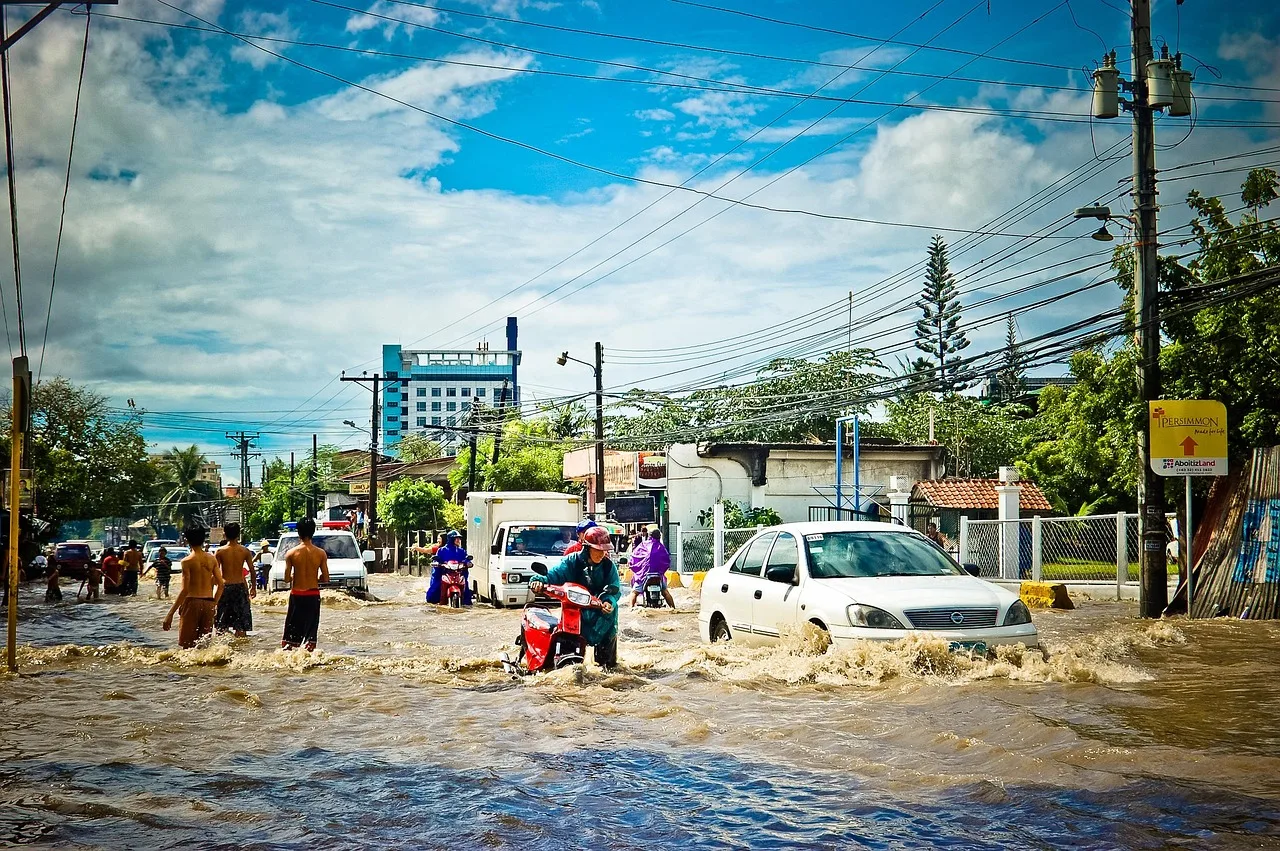
Halifax faces the opposite hazard. Storm surge is a rise in sea level driven by low pressure and wind, and it arrives with a hurricane or a strong winter storm. Lead time is measured in hours.
River flood vs storm surge
Winnipeg Red River
- Lead time
- Weeks
- Cause
- Spring melt
- Water type
- Fresh
- Season
- March to May
- Damage
- Sewer backup
Halifax storm surge
- Lead time
- Hours
- Cause
- Low pressure, wind
- Water type
- Salt
- Season
- June to November
- Damage
- Corrosion, wind
The city's coastline is long, indented and heavily built. The harbour, the Northwest Arm and the eastern shore all put property close to water, and a surge that lands on a high tide pushes seawater into streets and basements.
Halifax answers with coastal flood planning that maps exposure and sets expectations for new development. The municipality's environment and climate change programs cover sea level rise, shoreline policy and adaptation. For a restoration firm, those documents are a map of where future losses concentrate.
Surge damage is not river damage. Salt water corrodes metal, wrecks electrical systems and leaves residue that ordinary drying does not touch. Materials that would dry in place after a clean-water loss come out instead.
Wind arrives with the water. Hurricanes and post-tropical storms strip shingles, break windows and open roofs, so one event produces intrusion and structural damage together. That combination drives scope, sequencing and cost.
Coastal humidity is a year-round factor. Even between storms, salt air and damp conditions hold building materials closer to their moisture threshold, which shortens the margin between a minor intrusion and a mould problem.
Coastal flood planning also decides where reconstruction is allowed and how it must be built. Elevation requirements, setbacks and flood construction levels change what a rebuild looks like, and a firm that ignores them hands the owner a permit problem.
Where surge losses land in Halifax
Exposure is not uniform. Low-lying peninsula streets, harbourfront properties and older neighbourhoods on combined sewers carry the most risk. Newer subdivisions on higher ground get wind and rain damage instead.
That split decides crew placement and marketing. A firm that knows which Halifax streets flood from tide and which flood from rain can price and staff accordingly, and it explains why coastal markets reward different capabilities than Prairie ones. The same logic runs through our water restoration equipment coverage.
Nova Scotia hurricane recovery and Halifax permit requirements after a flood
Nova Scotia hurricane recovery follows the storm's own order: landfall, wind damage, surge, power loss, then weeks of drying and repair. The province coordinates through its emergency management structure while municipalities handle local response.
In Halifax the bottleneck after a major storm is permits. Reconstruction that changes structure, footprint or elevation needs approval, and the municipality's building and development permits process governs how that work proceeds. Owners who demolish before approval often rebuild twice.
Permit requirements are not uniform. Like-for-like repair may need little or nothing. Raising a structure, changing its envelope or altering drainage triggers review, and knowing which side of that line a job sits on keeps projects moving.
Adjusters also assess before repair. They want scope, cause and evidence of pre-loss condition, so firms that document before demolition make the claim smoother and cut disputed line items.
Power loss is the underrated part of Atlantic recovery. Extended outages mean no dehumidification, no heat and no ventilation during the critical first days, which makes generators and fuel the constraint rather than drying equipment.
Salt and wind-driven rain push water into wall cavities and roof assemblies that look intact from outside. Moisture mapping matters more here than in a river flood, where the water line is visible and the affected zone is obvious.
A worked example: two losses, same industry
A Winnipeg bungalow takes sewer backup during spring melt. The river is high, the ground is frozen, the basement is finished. The water is category 3, so affected materials come out, and drying runs in a cold space on temporary heat. The file stays simple because the cause is documented and the policy carries sewer backup.
A Halifax ground-floor unit takes surge during a post-tropical storm. Salt water reaches the electrical panel and the framing, and wind has opened part of the roof. The rebuild changes the envelope, so it needs a permit, and the permit timeline sits between drying and reconstruction.
Same industry, same equipment, different job. Winnipeg is a scheduling problem. Halifax is a permitting and sequencing problem.
Comparing insurer responses in Manitoba and Nova Scotia
Insurance is provincially regulated and nationally practiced. The large carriers write in both provinces, but the perils they price and the wording they use differ by region.
Overland flood coverage is widely available in Canada as an endorsement, not a default. Sewer backup is almost always separate, with its own limit. Storm surge sits in a grey zone that varies by insurer and by how the loss is described.
Manitoba's dominant pattern is spring overland flood and sewer backup. Insurers price a known season in a known geography, and adjusters see the same event type repeatedly, which tends to speed scope decisions.
Nova Scotia's dominant pattern is wind and surge from tropical or post-tropical systems. Losses are larger, more variable in cause, and more likely to put wind and water on one claim, which invites argument over which peril did what.
Winnipeg and Manitoba
- Main peril
- Spring overland flood, sewer backup
- Season
- March to May, forecastable
- Lead time
- Weeks
- Coverage focus
- Overland flood and sewer backup endorsements
- Claim pattern
- High volume, similar scopes
- Reconstruction rules
- Provincial and municipal floodplain controls
Halifax and Nova Scotia
- Main peril
- Storm surge, wind-driven rain, hurricane wind
- Season
- June to November, short notice
- Lead time
- Days or hours
- Coverage focus
- Wind, surge and water damage wording
- Claim pattern
- Lower volume, larger and more complex scopes
- Reconstruction rules
- Municipal permits and coastal construction requirements
Deductibles carry that difference. Wind and hail deductibles in Atlantic Canada are often a percentage of the dwelling limit, which raises the owner's share on a large storm claim. Manitoba water perils more often sit behind flat deductibles.
Adjuster availability decides response speed. A wide event in Nova Scotia stretches adjusting capacity across the province and slows first inspection. A Manitoba flood is concentrated, so resources stage in one area.
The takeaway for a firm is to read the policy before the loss. Which endorsement applies, what the deductible is and whether surge is named all change the scope you can bill.
Firms that build that into intake protect margin, and it is a recurring theme in any serious expansion and market guide for the sector.
Equipment, timelines and crew planning for two very different flood types
Equipment overlaps but the balance differs. Winnipeg leans on temporary heat, desiccant dehumidification and freeze protection. Halifax leans on generator capacity, moisture mapping and corrosion-aware handling.
Timelines differ more than equipment. A Red River flood gives weeks of warning, so a firm stages, schedules and rotates crews. A Halifax surge gives hours, so the first week is reactive and the schedule is rebuilt afterward.
Crew planning follows the same logic. Prairie floods reward depth: enough trained technicians to run many similar jobs at once. Atlantic storms reward breadth: wind, water, structure and permits on one file.
Both markets need documentation discipline. Manitoba files answer to provincial and federal program rules as well as insurer requirements. Nova Scotia files answer to municipal permit review as well as insurer scope.
Equipment and timeline comparison
- Winnipegtemporary heat, desiccant units, freeze protection, sewer backup extraction
- Halifaxgenerators, corrosion-resistant handling, moisture mapping, roof and envelope drying
- Winnipeg timelinepre-season staging, weeks of response, long recession
- Halifax timelineimmediate response, assessment within days, permit-driven reconstruction
Staffing checklist for a two-market firm
- Cross-train technicians on cold-weather drying and salt-water handling
- Hold generator and fuel contracts in Atlantic markets before storm season
- Build adjuster relationships in both provinces, not just one
- Track permit requirements in Halifax and floodplain rules in Manitoba
- Keep documentation templates that satisfy both insurer and program review
- Review capacity before spring in Manitoba and before hurricane season in Nova Scotia
Where the money actually is
River floods produce volume. Storm surges produce severity. A firm that runs Prairie flood work in spring and Atlantic storm work in autumn smooths its year, which matters in a business with seasonal peaks.
The most profitable water restoration services in both regions are the ones tied to perils the local market actually has.
Common questions
Does overland flood insurance cover Red River flooding in Winnipeg?
Overland flood coverage exists in Canada as an endorsement, so it depends on the policy. Sewer backup, the more common Winnipeg loss, is usually a separate endorsement with its own limit. Read the wording before the spring melt, not after.
Who coordinates provincial flood response in Manitoba?
The Manitoba Emergency Management Organization coordinates the provincial response with municipalities, provincial departments and federal partners. It also manages information and resource flow during an activation. Activation notices and re-entry advisories come through those official channels.
Does Halifax have a storm surge plan?
Halifax handles storm surge through coastal flood planning and its climate change programs, which cover sea level rise, shoreline policy and adaptation. Those documents also feed development rules. They are the closest thing the city publishes to a surge exposure map.
Do I need a permit to rebuild after a flood in Halifax?
Like-for-like repair may need little or no approval. Work that changes structure, footprint or elevation goes through the municipality's building and development permits process. Ask the municipality before demolition, because sequencing the permit after the tear-out costs the owner weeks.