Guides
Water restoration startup: lanes, license and demand
Water restoration startup: the first decisions. Choosing an insurance, direct-pay or commercial lane, the license behind the work, and how to read demand.
What to take away
- A water restoration startup sells response time and documentation before it sells drying. The phone answered at two in the morning wins work that no advertising budget buys back.
- Decide early whether you will run insurance losses, direct-pay work, or both. They have different cash cycles and they fail for different reasons.
- License and certification come before marketingthe state contractor license your state issues, IICRC certification, and a file a reviewer can open and pay.
- Own only the drying capacity you can keep busy through a slow month. Rent the surge.
- The dry standard, the moisture map and the daily readings are what a carrier is paying for. A missed day of readings loses the argument weeks later.
- Local demand is measured in referral relationships, not in population.
Water losses involve live electrical circuits, sewage, and materials in older buildings that may contain asbestos or lead. Nothing here assesses a building. Treat it as business guidance and bring in qualified specialists for the structure itself.
What the business actually sells
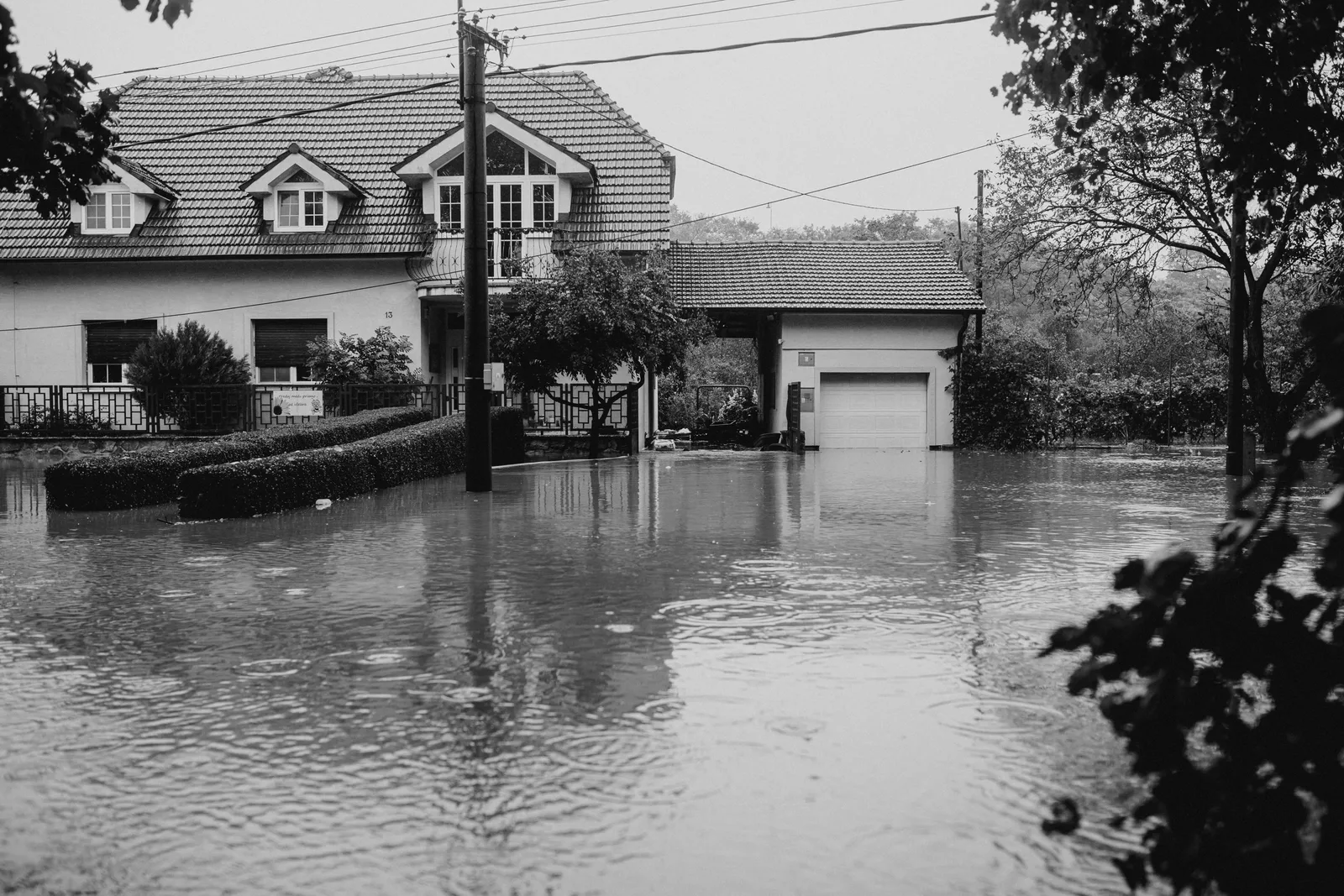
A homeowner standing in an inch of water in a finished basement is not shopping. They are calling whoever picks up. The company that arrives first usually keeps the job, so dispatch, drive time and a technician who can start extraction on the first visit are the real product in hour one.
What gets paid is the paperwork. On an insurance loss, a reviewer who was never in the building checks the invoice and reads the initial inspection, moisture map, affected material inventory, and atmospheric readings. That reviewer also reads equipment placement and the daily monitoring log.
Where those records are complete the scope holds; where they are thin the scope gets cut, and the cut lands on the margin the crew already earned.
New owners tend to invest in trucks and dehumidifiers and to treat documentation as clerical work done after hours. That is backwards. Build the documentation habit in the first month, while volume is low enough to practice it.
Choose the work before you buy the equipment
Three lanes exist and each demands something different.
- Insurance mitigation, mostly residential, mostly emergency. Steady volume, slow payment, price scrutiny, and a heavy documentation burden.
- Direct-pay worksmall losses under a deductible, landlord and property manager calls, appliance leaks. Fast payment, smaller tickets, and a customer who reacts to the total rather than to a line item.
- Commercial and multifamily response. Larger equipment counts, contract and access requirements, longer sales cycle, and a single relationship worth many jobs.
Pick one to start and add a second only when the first is running without you. Mixing all three in month one produces a service promise nobody in the company can define, which shows up first as an estimator who cannot answer a pricing question.
The license, the certification and the file
Restoration work is construction work in most states, so the first credential is usually a state contractor license issued by the state's contractor licensing board. California's Contractors State License Board and Florida's Department of Business and Professional Regulation are two examples, and some states put a separate mold remediation or assessment license on top of the contractor license. Read your own board's requirements before the first invoice, not after.
The industry's certification body is the IICRC, the Institute of Inspection, Cleaning and Restoration Certification. Its S500 Standard and Reference Guide for Professional Water Damage Restoration is the document behind the water categories, the classes of loss and the dry standard a reviewer reads your file against, and technician certification in water damage restoration is the credential adjusters and property managers ask about.
The file itself is usually built in Xactimate, the estimating platform from Verisk. Programs and reviewers expect line items and documentation to fit that format, and the sooner whoever writes your scopes learns it, the fewer invoices come back rewritten.
On insurance, general liability is the floor, along with commercial auto and workers' compensation where the state requires it. Mold and pollution liability usually sits in a separate policy or endorsement rather than inside a standard general liability policy, and both carriers and property managers ask for certificates before they send work.
Reading a local market honestly
Population and search volume tell you how many people could call. They do not tell you who will.
Count referral sources instead. List plumbing companies that run after-hours dispatch, property management firms with more than a handful of doors, and HVAC contractors who see condensate failures.
Add independent insurance agents and the plumbers' supply houses where those people already talk to each other. That list is usually short, which is the useful part: you can work through it in a quarter.
Then look at what makes losses happen where you are. Freeze events and pipe bursts, aging supply lines in older housing, seasonal groundwater and storm patterns, and the building age mix all change both the volume and type of work.
A market with a long freeze season and many unconditioned crawlspaces produces a different job mix from a coastal market with slab-on-grade construction.
For public numbers, the U.S. Census Bureau's American Community Survey publishes housing age, tenure and unit counts by county, which is the closest thing to a map of where losses will happen. The National Oceanic and Atmospheric Administration's climate records give freeze frequency and storm history for the same area. Neither tells you who will call you; together they tell you what the housing stock is likely to do when it does.
Test the conclusion cheaply. Take a narrow offer to five referral targets, answer the phone for a month, and see what comes through the door. Five real calls tell you more than any market report.
Cash, and why it ends most attempts
Restoration pays out before it collects. Payroll runs weekly, equipment finance monthly. The invoice goes out after the structure is dry. Then it waits on adjuster review and again on the carrier.
Meanwhile you collect the deductible from the customer. It is the homeowner's obligation under the policy, and absorbing it or offering something of value to steer the claim is the kind of inducement state insurance codes police as an unfair trade practice. Check your own state's rule instead of copying a competitor's advertising.
Plan the runway around that gap rather than around the startup purchase list. The question is not whether you can afford the equipment. It is whether you can afford to run crews for the length of a full collection cycle with nothing coming in.
Sources that set the boundaries
The U.S. Small Business Administration: SBA Business Guide lays out the general sequence of forming, funding and running a company, which is the part of the work that is the same for a restoration firm as for any other contractor. Use it for the general frame and treat every trade-specific question as separate.
Registration and recordkeeping start on day one, not at the first tax deadline. The Internal Revenue Service: Starting a business page sets out structure choice, tax identification and the recordkeeping expectation that later makes job costing possible at all.
For the hazards that decide whether a job is yours to take, the U.S. Environmental Protection Agency: Flood Cleanup to Protect Indoor Air and Your Health page names the electrical, chemical, biological and drying risks in flood work and says plainly when a job needs qualified help rather than a willing crew.
For pay planning, the U.S. Bureau of Labor Statistics: Occupational Employment and Wage Statistics Tables publish occupation and area wage estimates. They are one input into what a technician costs in your metro area, not a rate card.
The first ten jobs are your research budget
Treat the opening jobs as paid research rather than as revenue, because that is what they are worth.
For each one, record what you did not expect. Note how long extraction took, how many air movers the room needed, how many monitoring visits the job consumed, and how far the drive was.
Record what the customer asked that you could not answer, and how many days passed between completion and money arriving.
Ten jobs is enough to replace every assumption in your opening plan with a measurement. You learn your real cost per job, real drying time by job type, and real collection cycle.
All three will differ from the assumptions you started with. That is not a sign of a bad plan. It is the plan doing its job.
Two findings recur often enough to predict. Monitoring visits eat more of the week than anyone expects. That caps how many jobs one technician carries long before equipment does.
The insurance collection cycle runs longer than the working capital assumption most new owners make. That is why the runway calculation matters more than the equipment list.
Write the ten summaries down as you go rather than reconstructing them later. The whole exercise costs an extra ten minutes per job and it is the cheapest market research this business will ever get.
Common questions
How fast does a new company have to answer a call?
Fast enough that the caller does not dial the next result. That means a live human at any hour, a technician moving within the hour, and an honest arrival window at the time of the call.
If you cannot staff that yet, say so and quote a real time instead of promising a response you will miss.
Should the first hire be a technician or an estimator?
Usually a technician, because the owner can still write and defend a scope while volume is low, and cannot be on two jobs at once. The role that follows depends on which one is capping the business: if approved scopes are sitting unbilled, the next hire is administrative rather than field.
Is it worth chasing a carrier program early?
A program brings volume without relationship building, and in exchange it asks for pricing concessions, cycle-time commitments and work built in its own estimating format. That is a reasonable way to fill a schedule and a poor foundation for a business, because the volume can be redirected at any time. Build local referral sources in parallel from the start.
What does an early failure usually look like?
Not a lack of calls. It is a company that took the calls, dried the buildings, and could not produce the documentation to get paid at the scope it worked, while payroll and equipment notes kept coming due.