Guides
Water restoration hiring and retention: roles, training ladder, on call rotation
Water restoration hiring and retention: the four roles, a four-stage training ladder, safety duties, on call pay math, competency assessments, and turnover steps.
What to take away
- Hire for reliability at 2am and train the drying. The technical part is teachable and turning up is not.
- Design the on-call rotation before you hire, because it is the single thing that decides whether people stay.
- Certification is the floor, not the training. A certificate says someone passed a course, not that they can set a dry standard in a strange basement.
- Safety training is a program with records, not a talk. Respiratory protection in particular carries duties beyond handing out a mask.
- Write down what competent looks like per role, then assess against it. Without that, promotion is a popularity contest.
Employment obligations differ by state and change. This is a hiring and training approach, not legal advice, and pay practice questions belong with a qualified adviser.
The roles, and what each one is actually for
A small restoration company has four roles long before it has four job titles.
Four roles, four decision sets
Technician
- Core output
- Repeatable readings
- Owns
- Measurement
- Escalates
- Odd readings
- Scarce?
- Trainable
Crew lead
- Core output
- Drying plan
- Owns
- Plan changes
- Escalates
- Job beyond crew
- Scarce?
- Hardest to find
Estimator/PM
- Core output
- Defended scope
- Owns
- Payer contact
- Escalates
- Scope disputes
- Scarce?
- Half commercial
Coordinator
- Core output
- Paid invoices
- Owns
- Scheduling
- Escalates
- Missing docs
- Scarce?
- Decides cash flow
Technician. Extracts, places equipment, takes readings, records them, and protects the property. The core skill is careful, repeatable measurement under time pressure.
Crew lead. Decides the drying plan, adjusts it from readings, and is the person who says a job is beyond the crew. This is a judgment role and it is where most companies are short.
Estimator or project manager. Writes and defends the scope, handles the payer, and keeps the customer informed. Half technical, half commercial.
Coordinator. Answers the phone, schedules monitoring visits, chases documentation and gets invoices out. In a small company this role usually determines whether you get paid.
Write those four descriptions in terms of decisions rather than tasks. A technician who knows which decisions are theirs and which are the crew lead's is worth two who do not.
Hiring for the part that cannot be trained
You can teach psychrometry. You cannot teach someone to answer the phone at 2am for the third night running, or to go back and check the crawlspace when nobody would know.
Hiring for untrainable traits
- Ask about a 2am call-out and what they did
- Ask how they handle an extra wet area
- Run a working interview with equipment and readings
- Watchrecord what they found or expected
- Check driving records where a vehicle is involved
- Keep checks consistent per role
- Start EEOC small-business compliance before interviewing
Test for that: ask about a night they were called out in a previous job and what they did. Ask how they would handle finding an extra wet area at the end of a long day.
Run a working interview where the candidate handles equipment and takes readings under observation. Watch whether they record what they found or what they expected.
Check driving records when the role involves a vehicle. Be consistent about which checks you run for each role.
Hiring practices face non-discrimination requirements from the first employee. The U.S. Equal Employment Opportunity Commission: Small Business Resource Center is the right starting point for what a small employer needs in place before interviewing.
The training ladder
Build it in four stages, and do not let anyone skip one.
The four-stage training ladder
- 1. Safety and property protection, before any technical training
- 2. Measurementmeters, reading points, dry standard
- 3. Dryingpsychrometry, equipment placement, reading trends
- 4. Judgmentwhen to stop and call, taught alongside someone
- Safety and property protection.Electrical hazards, protective equipment, ladders, confined spaces, lifting, and how to leave a customer's home each night. Before any technical training.
- Measurement.Pin and pinless meters, thermo-hygrometers, where to place reading points and why, and how to record a dry standard. This is the foundation everything else rests on.
- Drying.Psychrometry in practice, equipment selection and placement, reading a trend, and adjusting a plan. Trade certifications cover this ground and are worth requiring.
- Judgment.When a job is beyond the crew, when a category has changed, when to stop and call. Taught by working alongside someone who has done it, not by a course.
Stage four is where microbial work sits, and it needs a firm boundary. The U.S. Environmental Protection Agency: Mold Cleanup guidance is explicit that moisture correction comes first and that some conditions call for professional experience. A technician who cannot recognize that boundary should not be sent to jobs where it might appear.
Safety training that meets its own obligations
Two areas need more than a toolbox talk.
Safety duties and session records
- Respirator selection, medical evaluation, fit testing
- Issuing a mask does not satisfy the duties
- Assess before entering a wet space
- Assess before plugging anything in
- Assess before touching metal in standing water
- Record who attended, what was covered, who delivered, date
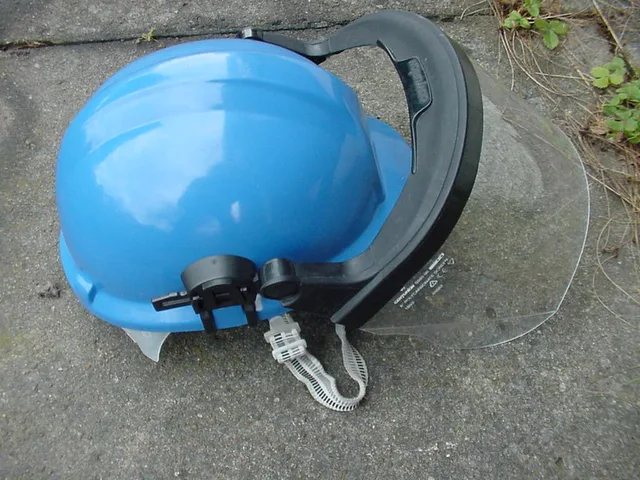
Respiratory protection, where it is required, brings duties around selection, medical evaluation and fit testing, and none of them are satisfied by issuing a mask. Get advice on what your specific work requires and keep the records.
Electrical safety around standing water is the hazard most likely to kill someone in this trade. Make the arrival sequence explicit: assess before entering, before plugging anything in, and before touching anything metal in a wet space.
Record every session: who attended, what was covered, who delivered it, and the date. Those records matter for an underwriter, for a customer's attorney, and most of all for the next new hire who needs to know what the last one was taught.
Designing the rotation people will stay for
Restoration loses good technicians to fatigue, not to pay. The rotation is therefore a retention decision.
Rotation rules that keep people
- Publish on-call schedules in advance
- Make on-call periods predictable and finite
- Pay for standby and call-outs
- Give real recovery after a night shift
- Cap consecutive on-call weeks
- Document what happens when two calls land at once
One schedule that holds up for a crew of four is one week on call, two weeks off. The on-call week runs Monday 5pm to the following Monday 7am. Weekday callouts go to the person on call, and weekends add one backup.
Standby pay is usually a flat amount per on-call day, typically $25 to $75 at small US firms, with callout hours paid at the normal rate from dispatch. Treat those as typical figures, not a scale. What you owe depends on your state.
Recovery matters as much as the schedule. After a callout that ends after midnight, the technician starts the next shift late or takes the day. Write that rule down and hold it.
Wage and hour rules bite here, and on-call and travel time are exactly where they are least intuitive. The U.S. Department of Labor: New and Small Businesses material covers the federal position for a small employer, and state law frequently adds to it.
Standby pay is where states diverge most. Some require pay for on-call hours when the employee cannot use the time for themselves, and others leave it to agreement. In Canada the same questions run through provincial employment standards.
Paying for it, and pricing for it
A rotation that pays properly costs money, and that cost belongs in the rate you charge rather than in the owner's margin.
Check what the roles you need actually pay in your area against the U.S. Bureau of Labor Statistics: Occupational Employment and Wage Statistics Tables before setting a scale. Treat it as one input, not an answer.
Typical ranges in many US metros run about $18 to $22 an hour for a starting technician and $26 to $34 for a crew lead. They move with the metro and the shift.
Here is how the rotation comes back through the rate. A crew of four on standby at $40 per on-call night costs $280 a week, about $14,560 a year. If the company bills around 8,000 production hours a year, that is about $1.80 per billable hour.
Recovery days add more. Four people taking six days each is 24 days, roughly 190 hours at a fully loaded $26 an hour. That is about $4,900 a year, or about $0.60 a billable hour.
Together those two lines add roughly $2.50 to every billable hour. Bury it in margin instead and the rotation quietly dies.
Those numbers are illustrative. Your billable hours, burden rate and local standby practice set the real figure.
The rest of the hiring decision follows from your business shape. The service lines you sell decide which competencies you need. The drying and measurement equipment you own decides what a technician must operate. Your position in the licensing stack decides what training is mandatory, and the local market you serve decides how many people you can keep busy.
Assessing rather than assuming
Write one page per role describing what competent looks like, in observable terms. Then assess against it at thirty days, ninety days, and annually, with the crew lead and the person both signing.
A technician competency page can be seven lines:
- Sets a written dry standard per affected room, with units and a date.
- Records readings at the same points each visit and explains the trend in one sentence.
- Places each piece of equipment for a stated reason.
- Calls when the category changes or the job is beyond the crew.
- Tells the customer what happens next before leaving.
- Leaves the property secure and photographs the state on leaving.
- Logs equipment in and out with serial numbers and condition.
Score each line 1 to 4: 1 needs supervision, 2 does it with a prompt, 3 does it alone, 4 can teach it. A technician at 3 on every line can run work alone. Anything below 3 becomes the training plan for the next thirty days. Both people sign and date the page.
That gives you three things: a promotion decision you can explain, a training plan aimed at real gaps, and an honest answer when a customer asks what qualifies the person in their house. It also feeds the service quality standard, since most quality failures trace back to a competency nobody had checked.
When someone leaves
Turnover is normal in this trade and expensive when it is handled badly. Two things protect the company, and both have to exist before the resignation.
The first is the job file. If readings, photographs and equipment records live in a shared system rather than on a technician's phone, a departure costs you a person rather than a set of open jobs nobody can finish. Check where the photographs actually are, because that is usually the gap.
The second is access removal on the day, not the week: email, the job system, the accounting system, vehicle keys and the building. Write it as a short checklist so it is done under pressure.
Then run an exit conversation and ask one useful question: what would have kept you. The answers cluster, and they are rarely the wage alone.
Rotation frequency, recovery after nights, and equipment that fights the crew come up far more often. Each is fixable and much cheaper than replacing another technician.
Collect the equipment back and record its condition while you are at it. Restoration equipment lives in vehicles and in customers' buildings, and a departure is when unrecorded units quietly stop existing.
Common questions
Should we require certification before hiring?
Require it for the crew lead and fund it for the technician. Insisting on it at entry level in a tight labor market means competing for a small pool when you could be training a reliable person yourself.
How long before a new technician can run a job alone?
Longer than most owners want, and the honest test is the assessment rather than the calendar. A technician who can set a dry standard, place equipment for a stated reason and recognize when to call is ready. One who cannot is not, at any number of weeks.
What is the biggest hiring mistake in this trade?
Hiring for equipment familiarity and discovering unreliability at 2am. The second biggest is hiring a crew lead from outside without checking whether they can explain a reading trend.
How do we keep people after the first year?
Predictable rotation, paid standby, real recovery after nights, a training path with dates on it, and a crew lead who is not the last person to hear about a problem. Pay matters and it is rarely the first thing that breaks.